Legal Age to Buy Cannabis California: Your Essential Guide
legal age to buy cannabis California

Legal Age to Buy Cannabis California: Your Essential Guide

Navigate California's cannabis laws with confidence and ensure a legal, informed purchasing experience.

Understand the Laws

Key Takeaways

  • ✓ Recreational cannabis: 21 years old with valid government-issued ID.
  • ✓ Medical cannabis: 18 years old with a valid physician's recommendation and state-issued medical marijuana card.
  • ✓ Purchases must be made from licensed dispensaries, not from unlicensed sources.
  • ✓ Daily purchase limits apply for both flower and concentrates.

How It Works

1
Verify Your Age & ID

Ensure you are either 21+ for recreational use or 18+ with a medical recommendation. Have a valid, government-issued photo ID ready for verification.

2
Locate a Licensed Dispensary

Use online resources or apps to find state-licensed dispensaries in California. Avoid unlicensed sellers to ensure product safety and legality.

3
Understand Purchase Limits

Familiarize yourself with the daily purchase limits for different cannabis products (e.g., flower, edibles, concentrates). Dispensary staff can also clarify these limits.

4
Make Your Purchase & Consume Responsibly

Select your desired products and complete your purchase. Remember to consume cannabis responsibly and only in private residences, never in public or while driving.

Understanding California's Cannabis Legal Framework
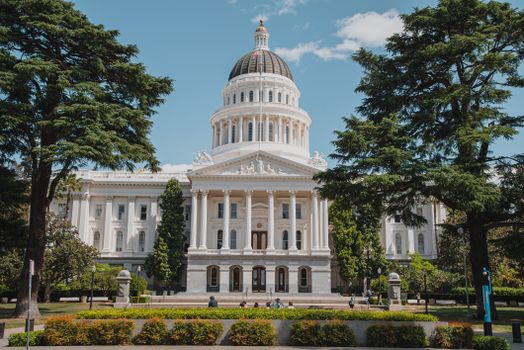
Majestic view of a historical capitol building surrounded by lush greenery. Photo: Josh Hild / Pexels
California has long been at the forefront of cannabis reform, first with medical marijuana in 1996 via Proposition 215, and later with recreational adult-use cannabis under Proposition 64, the Adult Use of Marijuana Act (AUMA), passed in 2016. This progressive stance has created a thriving, yet highly regulated, cannabis market. For anyone looking to purchase cannabis in the Golden State, understanding the nuances of these laws is paramount to ensure compliance and avoid potential legal pitfalls. The core distinction lies between medical and recreational use, each carrying specific age requirements and associated regulations. While both avenues provide access to cannabis, the eligibility criteria, purchasing limits, and even the types of products available can vary slightly. It's not just about knowing the legal age; it's about comprehending the entire ecosystem of rules that govern cannabis transactions, from the point of sale to consumption. This foundational understanding is crucial for both residents and visitors alike, ensuring that your engagement with California's cannabis industry is both enjoyable and lawful. The state's regulatory bodies, primarily the Department of Cannabis Control (DCC), oversee all aspects of the industry, from cultivation and manufacturing to distribution and retail, ensuring product safety and consumer protection. Their stringent regulations mean that every licensed dispensary operates under a strict set of guidelines designed to uphold public health and safety. Navigating these regulations can seem complex at first, but with the right information, it becomes straightforward. For example, the type of identification required, the maximum amount of product one can purchase in a single transaction, and even where you can legally consume cannabis are all dictated by these laws. Ignoring these details can lead to fines, confiscation, or more severe legal consequences. Therefore, this section aims to demystify California's cannabis legal landscape, providing a clear roadmap for anyone interested in purchasing cannabis within the state's legal boundaries. It’s important to remember that while California has legalized cannabis, federal law still classifies it as a Schedule I controlled substance, which has implications, especially for federal land or interstate travel. However, within California's borders, state law prevails for licensed activities. Understanding this duality is also part of being an informed consumer. The journey into California's legal cannabis market begins with a solid grasp of its foundational laws and the distinctions between its two primary access points: medical and recreational. This knowledge not only empowers consumers but also contributes to the responsible growth and sustainability of the state's cannabis industry. Always prioritize purchasing from licensed establishments to guarantee product quality and adherence to all state-mandated safety standards.

Recreational vs. Medical: Age Requirements and Access

Close-up of a contactless payment using a card reader and laptop, highlighting digital security. Photo: REINER SCT / Pexels
The fundamental difference in the legal age to buy cannabis in California hinges on whether you are purchasing for recreational or medical purposes. For recreational adult-use cannabis, the law is clear: you must be 21 years of age or older. This age requirement is strictly enforced by all licensed dispensaries, and a valid, government-issued photo identification is mandatory for every purchase. Acceptable forms of ID typically include a state-issued driver's license, a state ID card, a passport, or a military ID. The ID must be current and clearly show your date of birth. Dispensaries use sophisticated ID scanners and train their staff extensively to prevent sales to underage individuals, making it virtually impossible to circumvent this rule. This 21+ age limit aligns California with other states that have legalized recreational cannabis, mirroring the legal drinking age for alcohol. The intent behind this age restriction is primarily public health, aiming to protect developing brains from potential adverse effects of cannabis use. It also serves to regulate the market and prevent diversion to minors. Conversely, for medical cannabis, the legal age is 18 years old. However, meeting this age requirement alone is not sufficient. To purchase medical cannabis at 18, an individual must possess a valid physician's recommendation for medical cannabis use. This recommendation typically comes from a licensed California physician who has determined that cannabis could be beneficial for a qualifying medical condition. Furthermore, while a physician's recommendation is the primary requirement, many patients opt to obtain a state-issued Medical Marijuana Identification Card (MMIC) from the California Department of Public Health. While not strictly mandatory for purchasing with a valid doctor's recommendation, the MMIC offers several benefits, including sales tax exemption on medical cannabis purchases and often greater legal protections. Dispensaries catering to medical patients will require both the physician's recommendation (or MMIC) and a valid government-issued ID to verify age and patient status. The distinction between recreational and medical access is significant not only for age but also for purchase limits and, as mentioned, tax implications. Medical patients often have slightly higher purchase limits and are exempt from certain state sales taxes on cannabis products, making the MMIC a valuable asset for frequent users. It's crucial for individuals between 18 and 20 years old who wish to access cannabis legally to pursue the medical route, as recreational dispensaries will turn them away. Understanding these bifurcated pathways ensures that consumers can access cannabis lawfully and in accordance with their individual needs and eligibility. Always ensure your documentation is current and legitimate to avoid any issues at the dispensary.

Identifying Valid Dispensaries and Ensuring Product Safety
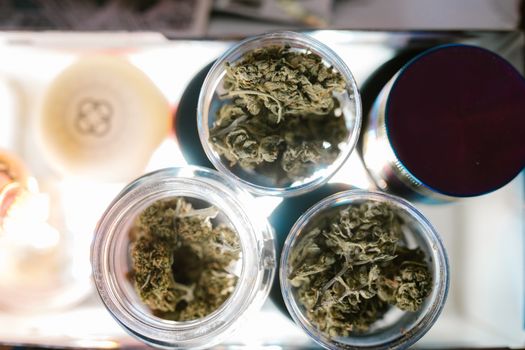
Close-up of cannabis buds in jars from above, highlighting marijuana storage. Photo: RDNE Stock project / Pexels
Once you meet the legal age to buy cannabis in California, the next critical step is to ensure you are purchasing from a licensed and regulated dispensary. The California Department of Cannabis Control (DCC) is the primary regulatory agency responsible for licensing and overseeing all commercial cannabis activity in the state. This includes cultivators, manufacturers, distributors, testing labs, and, crucially, retailers (dispensaries). Purchasing from an unlicensed source carries significant risks, including exposure to untested products that may contain pesticides, heavy metals, mold, or other harmful contaminants. Unlicensed products also bypass the rigorous quality control and labeling requirements mandated by the state, meaning consumers have no guarantee of what they are actually consuming. Furthermore, buying from unlicensed sellers is illegal and can result in legal penalties for the consumer, as well as for the seller. Locating a legitimate dispensary is relatively straightforward. The DCC provides an online license search tool where you can verify if a business holds a valid state license. Many reputable cannabis consumer apps and websites also list only licensed dispensaries, often with reviews and menus. Look for dispensaries that prominently display their state license number (a 19-digit alphanumeric code starting with 'C' for retail) and local permits. Licensed dispensaries are required to adhere to strict packaging and labeling regulations. All products must come in child-resistant packaging and feature labels that include: the product's THC and CBD content, a list of all ingredients, warnings about potential health risks, the batch number, and the date of packaging. This transparency allows consumers to make informed decisions about the products they purchase and consume. Moreover, all cannabis products sold in licensed dispensaries must undergo mandatory laboratory testing for potency, pesticides, heavy metals, residual solvents, and microbial contaminants. These tests are conducted by independent, state-licensed laboratories, and the results are made available to consumers, often via QR codes on product packaging or directly from dispensary staff. This multi-layered approach to regulation ensures a far safer and more reliable product than anything found on the illicit market. Prioritizing purchases from licensed dispensaries not only protects your health and adheres to the law but also supports the legal, regulated cannabis industry that contributes significantly to California's economy through taxes and job creation. Always be vigilant and skeptical of deals that seem too good to be true from sources that cannot verify their licensing or product testing. Your safety and legal compliance depend on it.

Purchase Limits, Consumption Rules, and Avoiding Common Mistakes
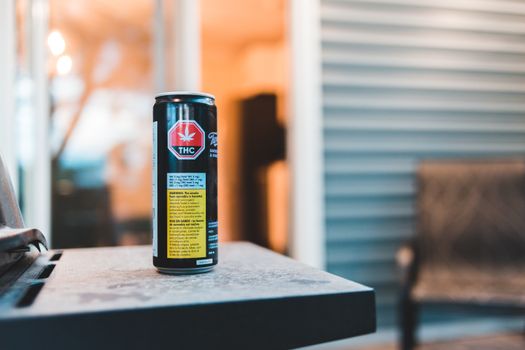
Colorful can of cannabis drink with text and image on shiny surface in building Photo: Erik Mclean / Pexels
Even after you've confirmed you meet the legal age to buy cannabis in California and have found a licensed dispensary, there are still important rules regarding purchase limits and consumption that you must observe. California law imposes daily purchase limits to regulate the amount of cannabis an individual can acquire. For recreational users (21+), the current limits are:
  • Flower: Up to 28.5 grams (approximately one ounce) of non-concentrated cannabis.
  • Concentrates/Edibles: Up to 8 grams of concentrated cannabis, which includes vape cartridges, edibles, tinctures, and other processed products.
Medical cannabis patients (18+ with a recommendation) generally have higher limits, typically up to 8 ounces of dried cannabis per day, unless their physician specifies a higher amount based on their medical needs. These limits are per person, per day, and dispensaries track purchases to ensure compliance. Attempting to exceed these limits by visiting multiple dispensaries in a single day is illegal and can lead to legal repercussions. Beyond purchasing, understanding consumption rules is equally vital. The most crucial rule is that cannabis consumption is illegal in public places. This includes parks, sidewalks, restaurants, bars, and even inside vehicles. Consumption is generally restricted to private residences, provided the property owner allows it. Landlords have the right to prohibit cannabis use on their property, even if it's legal under state law. Smoking or vaping cannabis is also prohibited anywhere tobacco smoking is banned, which covers most indoor public spaces and many outdoor areas. Driving under the influence of cannabis is strictly illegal and carries penalties similar to those for driving under the influence of alcohol, including fines, license suspension, and potential jail time. It is imperative never to operate a vehicle while impaired. Transporting cannabis across state lines, even to other states where cannabis is legal, is also prohibited under federal law, as cannabis remains federally illegal. When traveling within California, cannabis must be transported in a sealed container, out of reach, such as in the trunk of a car. Common mistakes to avoid include:
  • Purchasing from unlicensed sources: As detailed previously, this is illegal and dangerous.
  • Sharing with underage individuals: Providing cannabis to anyone under the legal age (21 for recreational, 18 for medical) is a serious offense.
  • Consuming in public: This can lead to fines and legal trouble.
  • Driving while impaired: Never drive after consuming cannabis.
  • Ignoring local ordinances: Some cities and counties in California have additional local regulations or bans on cannabis businesses, even if it's legal statewide. Always check local laws.
  • Bringing cannabis to federal land: National parks, forests, and other federal properties are subject to federal law, where cannabis is illegal.
By adhering to these limits and consumption rules, and by being aware of common pitfalls, you can ensure a safe, enjoyable, and legal experience with cannabis in California.

Comparison

FeatureRecreational (21+)Medical (18+)Unlicensed Market
Legal Age21+18+ with Doctor Rec/MMICNo official age, but illegal
ID RequiredGov-issued Photo IDGov-issued Photo ID + Rec/MMICOften none, but risky
Purchase Limits28.5g flower, 8g concentrate8oz flower (typically) + higher concentrateVaries, often larger amounts
Product Testing✓ Mandatory✓ Mandatory✗ No testing
Sales Tax Exemption✗ No✓ Yes (with MMIC)✗ No
Legality✓ Legal✓ Legal✗ Illegal

What Readers Say

"This guide was incredibly helpful for understanding the legal age to buy cannabis in California. I was confused about the medical vs. recreational differences, but now it's crystal clear. Knowing about valid IDs saved me a trip!"

Sarah J. · Los Angeles, CA

"As a visitor, I wanted to make sure I was buying legally. This article laid out all the rules for the legal age to buy cannabis in California, including purchase limits. Very comprehensive and easy to follow."

Mark D. · San Francisco, CA

"I used to think 18 was the age for everything, but this explained why 21 is for recreational. Getting my medical card at 19 was the right move, and this article confirmed I understood the process correctly. Great resource!"

Elena R. · San Jose, CA

"Good breakdown of the legal age to buy cannabis in California. I appreciate the emphasis on licensed dispensaries; it's easy to get swayed by cheaper, illicit options, but the safety warnings here are important."

David L. · San Diego, CA

"This guide covers everything! From the different age requirements to consumption rules, it's a one-stop shop for understanding cannabis laws in CA. Highly recommend for anyone new to the scene or just needing a refresher."

Jessica M. · Oakland, CA

Frequently Asked Questions

What is the absolute minimum legal age to buy cannabis in California?

The absolute minimum legal age to access cannabis in California is 18 years old, but this is exclusively for medical cannabis patients who possess a valid physician's recommendation and a government-issued ID. For recreational adult-use cannabis, the minimum age is strictly 21 years old.

Can I use an out-of-state ID to buy recreational cannabis in California if I'm 21?

Yes, licensed dispensaries in California will accept any valid, government-issued photo identification to verify your age for recreational cannabis purchases, as long as it clearly shows your date of birth and is not expired. This includes out-of-state driver's licenses or passports.

How do I get a medical cannabis recommendation if I'm 18-20 years old in California?

To get a medical cannabis recommendation, you need to consult with a licensed California physician who can evaluate your medical condition and determine if cannabis is an appropriate treatment. If approved, the doctor will issue a recommendation. You can also apply for a state-issued Medical Marijuana Identification Card (MMIC) through your county's health department.

Are there different purchase limits for medical vs. recreational cannabis in California?

Yes, there are different purchase limits. For recreational users (21+), the daily limit is 28.5 grams of flower and 8 grams of concentrates. Medical cannabis patients (18+ with recommendation) typically have a higher daily limit of 8 ounces of dried cannabis, with similar or slightly higher limits for concentrates, often based on their physician's specific recommendation.

Is it legal to consume cannabis in public in California?

No, it is illegal to consume cannabis in public places in California. This includes parks, sidewalks, beaches, restaurants, and anywhere tobacco smoking is prohibited. Consumption is generally restricted to private residences where the property owner permits it.

Who regulates the cannabis industry in California to ensure safety and legality?

The California Department of Cannabis Control (DCC) is the primary state agency responsible for regulating and licensing all commercial cannabis activity in California. They oversee cultivation, manufacturing, distribution, testing, and retail sales to ensure product safety, quality, and compliance with state laws.

What are the risks of buying cannabis from an unlicensed source in California?

Buying from unlicensed sources is illegal and carries significant risks. Products may be untested, containing harmful pesticides, heavy metals, or mold. They may also be mislabeled regarding potency. Furthermore, you face potential legal penalties for purchasing from illicit channels.

What if I'm 21 but don't have a valid ID when trying to buy cannabis?

Without a valid, government-issued photo ID that clearly shows you are 21 or older, a licensed dispensary cannot legally sell you cannabis, even if you are visibly over 21. ID verification is a strict requirement for all purchases.

Armed with this comprehensive guide, you now understand the legal age to buy cannabis in California, along with crucial regulations for safe and responsible purchasing. Always verify your age, choose licensed dispensaries, and consume responsibly to enjoy California's legal cannabis market to its fullest.

Topics: legal age to buy cannabis CaliforniaCalifornia cannabis lawsrecreational marijuana age CAmedical cannabis age Californiacannabis purchasing rules California
Leo List
Brampton weed
Adultwork EstrelaBet Vai de Bet R7 Bet Betão Galera Bet Rainbet Bet9ja Shop SportyBet BetKing Sisal Loto Foot Hollywoodbets YesPlay Odibets RushBet Jugabet BetWarrior BetCity MSport betPawa Fortebet